
Assault Lawyers Parramatta
Most assault charges are built on what the complainant said at the scene, not what the evidence actually shows. That gap between the police version and what happened is usually where the defence starts. We defend assault charges at Parramatta Local Court, District Court, and across Western Sydney.


Your Assault Charge Rarely Matches What Happened
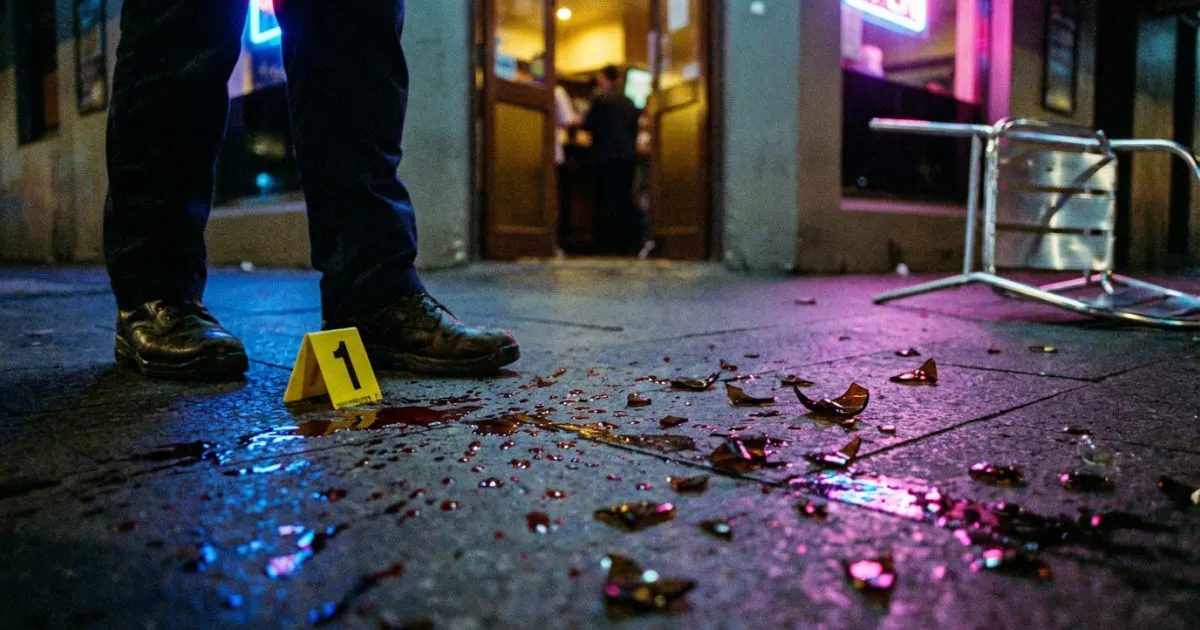
Three people involved in the same fight outside a venue in Parramatta. One walks away with common assault, another gets charged with assault occasioning actual bodily harm, and the third is facing reckless grievous bodily harm. Same car park, same night, same set of circumstances, but three completely different charges with three different maximum penalties. The reason comes down to what the complainant told police at the scene, not what the evidence actually supports.
That's how assault charges work in NSW. Police arrive, take a statement from the person making the complaint, and lay the charge based on what they're told. The police facts sheet reflects that initial account. It may not match the CCTV, the body-worn camera footage, or what independent witnesses saw. But it's the version printed on your Court Attendance Notice, and it's the version the prosecution will run with at Parramatta Local Court unless someone pulls the actual evidence apart.
Assault is the fourth most common offence type in the Parramatta LGA, with 1,794 recorded offences in the most recent reporting year. Across the Cumberland Police Area Command catchment, that number rises to over 2,186. These charges move through the court system quickly, your first mention (the initial court appearance) is usually only weeks away, and which charge is on that notice shapes everything that follows.
Why the Specific Assault Charge Changes Everything
The difference between walking out of court with no record and facing years in prison often comes down to which section of the Crimes Act 1900 is printed on your charge sheet. Common assault under s61 carries a maximum of 2 years imprisonment and stays in the Local Court before a magistrate. Assault occasioning actual bodily harm (ABH) under s59 carries 5 years, or 7 years if it happened in company. Reckless grievous bodily harm (GBH) under s35 carries 10 years, or 14 years in company, and can be committed to the District Court. Wounding under s33 carries up to 25 years. Affray under s93C carries up to 10 years. Each step up the charge ladder changes which court hears it (the jurisdiction), the penalty range, and the pressure on you to resolve it.
The penalties on the charge sheet are only part of the picture. A conviction for any assault offence can follow you for years, showing up on National Police Checks, Working With Children screenings, and government security clearances. Government jobs, teaching, healthcare, aged care, security, finance: all screen for violence-related convictions, and a single common assault from one incident can close off an entire career path.
When the charge carries a domestic violence flag, the consequences extend further. A DV-flagged assault conviction affects Family Court proceedings about custody and parenting orders, and triggers mandatory firearms licence revocation. The DV flag follows you separately from the assault conviction itself.
Police overcharge because they base the charge on the injury described at the scene, before anyone has reviewed the medical evidence. A bruise that fades in three days gets charged as ABH when the injury might not meet the "more than merely transient" threshold required under s59. That single charging decision is the difference between a 2-year maximum in the Local Court and a 5-year maximum with potential transfer to the District Court (called a committal).
Between now and your court date, CCTV footage from venues in Granville, Merrylands, Auburn, and across Western Sydney can be overwritten. Witnesses' memories shift. The prosecution's version hardens into the accepted account. The window to gather and preserve evidence that supports your side is narrow, and it closes faster than most people expect.
Where Assault Evidence Falls Apart in Western Sydney
What most people don't realise is that the way the evidence was gathered matters as much as the evidence itself. We've been defending assault charges at Parramatta since 2013, and our office at 100 George Street is a 2-minute walk from the courthouse at 12 George Street. We appear at Parramatta Local Court and District Court weekly. Call 1800 527 529 (1800 JBP LAW) or book a case review. Open 7 days, fixed-fee options available.
Self-Defence Is a Complete Defence, Not a Reduction
Self-defence under s418 of the Crimes Act 1900 is a complete defence. If your conduct was a reasonable response to a threat as you perceived it, the result is acquittal, not a reduced charge. We build self-defence arguments from body-worn camera footage, CCTV, and independent witness evidence, because that footage often tells a different story from the police facts sheet. We request it early, before it's overwritten or archived.
In group incidents, identification evidence is weaker than prosecutors assume. Low-light environments, crowded venues, and chaotic situations where multiple people were involved all undermine the reliability of witness identification. We challenge the identification procedure at its source: the opportunity to observe, the quality of footage, and whether police followed the required guidelines.
Reducing the Charge Before It Reaches a Hearing
Where the evidence supports a lesser charge, we negotiate with the prosecution before the matter reaches a hearing. A GBH charge reduced to ABH changes the jurisdiction from District Court to Local Court. An ABH charge reduced to common assault drops the maximum from 5 years to 2 years and keeps the matter before a magistrate where sentencing outcomes are more favourable. We review the medical evidence, the body-worn footage, and the independent evidence to build the case for a downgrade.
We appear at Parramatta, Blacktown, Penrith, Liverpool, Bankstown, Fairfield, and courts across Western Sydney on assault matters. For more on our assault defence work, see our Sydney assault lawyers page. Back to Parramatta criminal lawyer. If your assault charge carries a domestic violence flag, see our Parramatta DV lawyers page. For bail matters, see our Parramatta bail lawyers page.
Sometimes the evidence supports a guilty plea to a lesser charge, and that's the smarter move. A failed defended hearing (where the charge is contested at trial) on ABH can produce a worse sentence than a well-prepared guilty plea to common assault with proper submissions. We give you that assessment honestly, because the difference between contesting and preparing often determines the outcome more than the evidence itself.
What Proper Defence Preparation Achieves in Assault Matters
The outcome of an assault matter is rarely decided in the courtroom. It's decided in the weeks before, by the work that goes into it. For first-time common assault charges where the circumstances support it, a Section 10 dismissal under the Crimes (Sentencing Procedure) Act 1999 means the charge is proven but no conviction is recorded. A conditional release order without conviction can achieve the same result with a compliance period (a set time where you follow conditions, then the matter is behind you) attached. Your criminal record and your National Police Check stay clean either way. Those outcomes depend on the facts and the work that goes into presenting them, but they're realistic with the right preparation.
Where self-defence applies, the result is acquittal. No conviction, no record, no penalty. Where charge negotiations succeed, a serious charge can be downgraded or withdrawn entirely. We've had ABH charges reduced to common assault and resolved without conviction. We've had GBH charges downgraded where the medical evidence didn't support the original charge.
The charge, the evidence, the injury, and your personal circumstances all shape what's realistically achievable. But assault briefs have a short shelf life: CCTV from venues gets overwritten, witnesses' accounts shift, and the prosecution's version hardens with every week that passes. Acting before that window closes is what separates a strong defence from a missed opportunity. Book a case review or call 1800 527 529 before your court date.
Charged? Find out where you stand
Confidential. No obligation. Same day response.
Testimonials
FAQ
Frequently Asked Questions
What happens if you get charged with assault in NSW?
Police arrest you or issue a Court Attendance Notice (CAN), and you're given a date to appear at the Local Court closest to where the alleged offence occurred. For most people in Western Sydney, that's Parramatta Local Court at 12 George Street. Your first court date, called a mention, is usually two to four weeks after the charge.
At the mention, you don't enter a plea straight away. The court adjourns the matter so your lawyer can request the prosecution brief, which is the package of evidence police are relying on: statements, body-worn camera footage, CCTV, medical reports, and the police facts sheet. That brief is where the real picture of the case starts to form, because the charge on your CAN was based on what the complainant told officers at the scene, not on a full review of the evidence.
Once the brief arrives, your lawyer assesses whether the charge is supportable. Overcharging is common in assault matters. A bruise that fades in three days can end up charged as assault occasioning actual bodily harm (ABH) under s59 of the Crimes Act 1900 when the injury might not meet the legal threshold. If the evidence supports a lower charge, your lawyer negotiates with the prosecution for a downgrade before the matter reaches a hearing.
From there, the matter either resolves through charge negotiation and a plea to a lesser charge, proceeds to a defended hearing (where the charge is contested), or is withdrawn by the prosecution. We've been defending assault charges at Parramatta since 2013, and we see the same pattern repeatedly: the charge that lands on the CAN is not always the charge that reaches the courtroom. The work that happens between the mention and the hearing date is what determines the outcome.
What are the four types of assault charges in NSW?
The four main assault charges in NSW sit on a ladder, and each step up changes the maximum penalty, the court that hears the matter, and the pressure on you to resolve it.
Common assault under s61 of the Crimes Act 1900 is at the base. It covers any unwanted physical contact or threat of contact, even where no injury results. Maximum penalty is 2 years imprisonment, and it stays in the Local Court.
Assault occasioning actual bodily harm (ABH) under s59 is the next step. The prosecution needs to prove an injury that is "more than merely transient or trifling." A bruise, a split lip, a chipped tooth. Maximum is 5 years, or 7 years if the offence happened in company (meaning with others present and acting together). ABH can stay in the Local Court or be committed to the District Court.
Reckless grievous bodily harm (GBH) under s35 covers serious injuries: broken bones, lasting wounds, injuries that require surgery. Maximum is 10 years, or 14 years in company. Most GBH charges are dealt with in the District Court before a judge and jury.
Wounding with intent under s33 sits at the top. It requires proof that you intended to cause grievous bodily harm, and it carries a maximum of 25 years. Wounding charges are strictly indictable and go to the District Court or Supreme Court.
The jump between each level is steep. Common assault to ABH is the difference between 2 years and 5 years. ABH to GBH moves the matter from the Local Court to the District Court. Police decide which charge to lay at the scene, often based on the complainant's description of the injury rather than a medical report. That's why the charge on your Court Attendance Notice may not reflect the actual severity of the incident once the medical evidence is reviewed.
What is the difference between common assault and ABH?
The legal boundary sits on one word: injury. Common assault under s61 of the Crimes Act 1900 doesn't require any injury at all. It covers unwanted physical contact, or even the threat of it if the other person feared immediate violence. A push, a grab, a slap that leaves no mark. Maximum penalty: 2 years imprisonment.
ABH under s59 requires proof of an injury that is "more than merely transient or trifling." That phrase comes from the case law, and it's where most of the contestable ground lies. A red mark that fades in an hour probably doesn't qualify. A bruise visible the next day might. A split lip likely does. The prosecution has to produce evidence of the injury, usually photos taken by police and sometimes a medical report.
Here's the practical difference that matters: common assault stays in the Local Court with a 2-year maximum. ABH carries a 5-year maximum and can be committed to the District Court. That escalation changes the seriousness of the matter, the cost of defending it, and the sentencing range if it results in a conviction.
The problem we see regularly at Parramatta is that police charge ABH based on what the complainant tells them about the injury at the scene. If someone says "they hit me and it really hurts," that's enough for an ABH charge on the spot. But the medical evidence, when it arrives weeks later, may show an injury that doesn't clear the ABH threshold. A bruise that resolved in two days. No hospital attendance. No ongoing treatment.
When that happens, the right move is a representations letter to the prosecution setting out why the charge should be reduced to common assault. We prepare those submissions with the medical evidence attached. A downgrade from ABH to common assault drops the maximum penalty, keeps the matter in the Local Court, and significantly improves the sentencing options, including the prospect of a Section 10 dismissal under the Crimes (Sentencing Procedure) Act 1999.
What is the lowest punishment for assault?
A Section 10(1)(a) dismissal under the Crimes (Sentencing Procedure) Act 1999. The magistrate finds the charge proven but records no conviction and imposes no penalty at all. You walk out of court with a clean criminal record. Nothing on your National Police Check, nothing on a Working With Children screening, nothing that follows you into employment or visa applications.
Section 10 isn't automatic. The court weighs your character, the circumstances of the offence, the nature and seriousness of the charge, and any other factor the court considers relevant. For a first-time common assault charge where the circumstances are on the lower end, a Section 10 is a realistic outcome, but it requires proper preparation.
That preparation is more than just showing up and hoping. We prepare character references, evidence of community standing, employment records, and any steps you've taken since the charge, such as counselling, anger management, or apology letters. We also prepare written submissions that address each factor the court considers under s10 of the Crimes (Sentencing Procedure) Act 1999. A magistrate who sees a well-prepared application is more likely to exercise discretion in your favour than one who hears a two-minute plea.
One level above a Section 10 dismissal is a Conditional Release Order (CRO) without conviction. The charge is proven, no conviction is recorded, but you serve a compliance period of up to 2 years with conditions, typically good behaviour. Your criminal record stays clean. Above that, a CRO with conviction records the finding but avoids a Community Correction Order or imprisonment.
For common assault, these lower-end outcomes are regularly achieved at Parramatta Local Court. For ABH charges, the bar is higher, but a s10 dismissal is not impossible if the circumstances genuinely warrant it. We've secured non-conviction outcomes on assault matters since 2013 by putting the preparation work in before the sentencing date, not on the day.
Can I be charged with assault if I was defending myself?
Yes, and it happens constantly. Police arrive at a scene, take a statement from the person making the complaint, and lay a charge. They don't conduct a full investigation at 1am outside a venue in Parramatta. If the complainant says you hit them, you're charged. Whether you were defending yourself is something that gets tested later, in the courtroom.
Self-defence under s418 of the Crimes Act 1900 is a complete defence. Not a reduction, not a mitigating factor, a complete defence. If the court accepts that your conduct was a reasonable response to a threat as you perceived it at the time, the result is an acquittal. No conviction, no record, no penalty. The charge is dismissed entirely.
Two elements matter. First, you genuinely believed the threat existed. Second, your response was reasonable in the circumstances as you perceived them. A proportionate response to an actual threat is self-defence. Throwing a punch to stop someone who was about to hit you is a different situation from retaliating after a shove by breaking someone's jaw. The court examines what you perceived, what you did, and whether those two things were proportionate.
The critical evidence in self-defence cases is usually footage. Body-worn camera from police officers who attended the scene, CCTV from venues and streets across Western Sydney, and mobile phone recordings from bystanders. That footage often captures what happened before the complainant got involved. It shows who approached whom, who threw the first punch, and what the accused was responding to. We request that footage early, because CCTV from venues in Granville, Merrylands, and Auburn operates on a rolling overwrite cycle. If nobody requests it, it's gone.
Self-defence is not raised at sentencing. It's raised at a defended hearing, and the prosecution bears the burden of disproving it beyond reasonable doubt. That's important: you don't have to prove you were defending yourself. Once self-defence is raised, the prosecution has to prove you were not. We've run self-defence matters since 2013, and the strength of the defence almost always turns on how early the evidence was gathered and preserved.
Can assault charges be dropped if the complainant doesn't want to proceed?
Not automatically, and this catches almost everyone off guard. In NSW, criminal charges belong to the Crown, not the complainant. Once police lay a charge, the Director of Public Prosecutions (DPP) or the police prosecutor decides whether to continue. The complainant can tell police they don't want to proceed, and the prosecution can still run the matter to a hearing.
That said, a complainant who is unwilling to give evidence creates a practical problem for the prosecution. If their only real evidence is the complainant's testimony, and the complainant refuses to attend or refuses to testify, the prosecution's case may collapse. The prosecution can apply to have the complainant declared a hostile witness, or they can rely on the original statement in some circumstances. But a reluctant or unavailable complainant significantly weakens the case.
Here's where the process matters. If the complainant contacts police to say they want the charges dropped, your lawyer can write representations to the prosecution setting out why the matter should be withdrawn. Those representations don't just say "the complainant doesn't want to proceed." They address the strength of the remaining evidence, any inconsistencies in the initial account, and whether continuing the prosecution is in the public interest. The DPP Prosecution Guidelines require prosecutors to consider whether there's a reasonable prospect of conviction before continuing.
We prepare those representations carefully, because a vague letter from the accused's lawyer saying "the complainant wants to drop it" carries far less weight than a detailed submission identifying the evidentiary weaknesses. In some matters, the complainant's withdrawal combines with footage that contradicts the police facts sheet, and the prosecution has no viable path to conviction.
One warning: if your charge carries a domestic violence flag, the prosecution is far less likely to withdraw based on the complainant's wishes alone. DV matters carry additional policy considerations about complainant safety, and prosecutors treat withdrawal requests with more scrutiny. For DV-flagged assault charges, see our [Parramatta DV lawyers](/parramatta/domestic-violence-lawyers) page.
What is assault in company and why is it more serious?
"In company" means the offence was committed in the company of another person or persons. You don't both have to throw punches. If you committed the assault while someone else was present and acting with you, the "in company" aggravation applies, and the maximum penalty jumps.
Under the Crimes Act 1900, ABH in company (s59(2)) carries a maximum of 7 years, up from 5 years for ABH alone. GBH in company carries 14 years, up from 10. The "in company" element pushes the charge into a more serious category, changes the sentencing range, and makes it more likely the matter will be committed to the District Court rather than staying in the Local Court.
This aggravation is common in charges arising from group incidents. A fight outside a pub in Parramatta where three friends are involved. An altercation at a train station where two people are charged. The "in company" element doesn't require planning or coordination. If someone was with you and acting together with you during the offence, that's enough.
The problem with "in company" charges is the same overcharging pattern that runs through all assault matters: police apply it based on the complainant's statement that "there were others involved." Sometimes the footage tells a different story. Sometimes the other person was trying to pull you away, not joining in. Sometimes the identification of who did what in a chaotic, low-light situation is unreliable.
We challenge the "in company" element by examining what the footage actually shows about each person's role. If the evidence doesn't support the claim that you were acting together with the other person, the aggravation falls away, and the maximum penalty drops back to the base charge level. That reduction can move the matter from District Court back to Local Court, which changes the sentencing landscape entirely.
What are the standard non-parole periods for assault charges?
Standard non-parole periods (SNPPs) are sentencing guideposts set by the Crimes (Sentencing Procedure) Act 1999. They apply to a limited number of serious offences and act as a reference point for a mid-range case. The SNPP is not a mandatory minimum. A court can impose a sentence above or below the SNPP, but it must explain why if it departs from it.
For assault charges, the relevant SNPPs are:
- Wounding with intent to cause grievous bodily harm (s33, Crimes Act 1900): 7 years non-parole period, against a 25-year maximum. - Reckless GBH in company (s35(1)): 5 years non-parole period, against a 14-year maximum. - Reckless GBH (s35(2)): 4 years non-parole period, against a 10-year maximum.
Common assault (s61) and ABH (s59) do not carry standard non-parole periods. These charges are at the lower end of the assault ladder, and while they can result in imprisonment, the sentencing discretion is broader without an SNPP guidepost.
An SNPP matters because it tells you where a mid-range example of the offence sits on the sentencing scale. If the facts of your matter are below mid-range, the sentence should be below the SNPP. If the court imposes a sentence at or above the SNPP, it's signalling that it regards the offence as at least mid-range serious.
For people facing GBH or wounding charges at Parramatta, the SNPP frames the sentencing reality. But it also frames the negotiation. Reducing a reckless GBH charge to ABH removes the SNPP entirely and moves the maximum from 10 years to 5 years. That's why charge negotiation in serious assault matters is not just about optics. It changes the mathematical sentencing range the court works within.
Can you go to jail for assault in Australia?
Yes. Every assault charge in NSW carries a maximum term of imprisonment. Common assault under s61 of the Crimes Act 1900 carries up to 2 years. ABH under s59 carries up to 5 years. Reckless GBH under s35 carries up to 10 years. Wounding with intent under s33 carries up to 25 years. These are the legal maximums, not the typical outcomes.
Whether imprisonment actually happens depends on the specific charge, the circumstances of the offence, your criminal history, and the sentencing submissions put before the court. A first-time common assault where the circumstances are at the lower end rarely results in a custodial sentence. The more realistic outcomes in that range are a Section 10 dismissal (no conviction), a Conditional Release Order, or a Community Correction Order.
For more serious charges, the picture changes. A second or third ABH charge, an assault that caused significant injury, an offence committed while on bail or on a conditional liberty for another matter, all of these push the sentencing range upward. Once a charge reaches the District Court, whether by committal from the Local Court or because the offence is strictly indictable, the sentencing options include full-time imprisonment, an Intensive Correction Order (served in the community, not prison, for up to 3 years), or a Community Correction Order (CCO).
Between full-time imprisonment and a Section 10, there's a wide range of outcomes. The work that goes into sentencing submissions is what positions a matter toward the lower end of that range. Character references, employment evidence, evidence of rehabilitation steps taken since the charge, written submissions addressing each sentencing factor. We prepare those materials in the weeks before the sentencing date because a strong written application achieves more than a verbal plea on the morning.
What is an Intensive Correction Order?
An Intensive Correction Order (ICO) is a sentence of imprisonment served in the community. The court imposes a prison term, then orders that it be served under strict supervision outside of a correctional facility. Think of it as the last step before full-time custody.
Under Part 5A of the Crimes (Sentencing Procedure) Act 1999, an ICO can be imposed for up to 2 years in the Local Court and up to 3 years in the District or Supreme Court. The order comes with mandatory conditions: supervision by Community Corrections, a curfew monitored by electronic ankle bracelet in many cases, and prohibitions on drug and alcohol use. The court can also attach additional conditions like community service, counselling, or programme participation.
An ICO is only available where the court has already decided that the offence is serious enough to warrant imprisonment. It's not an alternative to a fine or a Community Correction Order. It's an alternative to actually going to prison. That's an important distinction, because it means the person receiving an ICO is someone who would otherwise be in a cell.
For assault charges, an ICO typically comes into play for mid-range ABH matters, repeat offenders facing common assault, or GBH charges where the circumstances allow a non-custodial approach. The court must be satisfied that the ICO is appropriate having regard to the seriousness of the offence, the person's criminal history, and whether they can comply with the intensive conditions.
Breaching an ICO has real consequences. If you breach a condition, the order can be revoked and you serve the remainder of the sentence in custody. That makes compliance critical, and it's why we only propose an ICO where we're confident the person can meet every condition the court sets. An ICO that collapses within three months produces a worse outcome than the original sentencing would have, because the court sees someone who was given an opportunity and didn't follow through.
What is the overcharging problem with assault charges?
Police decide which charge to lay at the scene, usually within the hour. They take a statement from the complainant, look at any visible injury, and select a section of the Crimes Act 1900 to print on the Court Attendance Notice. They're not waiting for medical records. They're not reviewing CCTV. They're making a charging decision based on incomplete information under time pressure.
The result is predictable. A complainant tells police their face is swollen and sore after being punched. Police charge ABH under s59 (5-year maximum) rather than common assault under s61 (2-year maximum). Three weeks later, the medical evidence arrives: no fracture, no lasting injury, bruising that resolved within days. The injury may not meet the "more than merely transient or trifling" threshold ABH requires. But the charge is already on the CAN, the matter is listed at Parramatta Local Court, and the accused is now responding to a charge that carries two and a half times the maximum penalty of what the evidence actually supports.
This pattern runs through Western Sydney courts every week. Charging decisions are made in the field, under pressure, based on one person's account. Nobody is reviewing CCTV at 2am. Nobody is waiting for medical reports. The charging decision locks in a penalty range and a court jurisdiction that may be far more serious than the facts warrant.
The fix is a representations letter to the prosecution. We write to the police prosecutor or the DPP, attach the medical evidence that has come in since the charge, reference the body-worn camera footage, and set out why the charge should be downgraded. ABH to common assault. GBH to ABH. An "in company" aggravation removed because the footage shows the co-accused was pulling the accused away.
Since 2013, we've run this process on hundreds of assault matters at Parramatta and across Western Sydney. The success rate on charge reductions depends entirely on the evidence, but the process of challenging the initial charge is often the single most impactful step in an assault matter. The charge dictates the jurisdiction, the penalty range, and the sentencing options. Changing it changes everything downstream.
How much does an assault lawyer cost?
Most criminal defence firms in Sydney charge either an hourly rate or a fixed fee for assault matters. Hourly rates for experienced criminal lawyers in Western Sydney typically range from $400 to $700 per hour, and you won't know the total cost until the matter is finished. For a defended hearing, that can add up quickly.
We offer fixed-fee options so you know the cost before you commit. A fixed fee means no surprises: you know what you're paying for, and it covers the preparation, court appearances, and correspondence included in the scope.
The cost depends on the charge and the complexity of the matter. A first-time common assault with a straightforward set of facts that resolves at a mention or sentence hearing is a different proposition from an ABH matter that goes to a defended hearing with multiple witnesses, contested CCTV, and cross-examination over two days. A GBH charge committed to the District Court involves a higher level of preparation, a longer timeline, and the involvement of a barrister for the hearing.
What you're paying for is the work that happens before court. Obtaining and reviewing the prosecution brief, requesting and analysing CCTV and body-worn camera footage, writing representations to the prosecution for charge reductions, preparing sentencing submissions with character references and supporting evidence, and, where necessary, preparing for a defended hearing. The court appearance itself is a fraction of the total work.
One thing worth understanding: the cheapest option isn't always the most cost-effective one. An underprepared matter that results in a conviction and a criminal record costs far more in the long run than the fee difference between a budget lawyer and one who does the work. A conviction on an assault charge affects employment, travel, and background checks for years.
Call 1800 527 529 for a confidential discussion about your matter. We'll tell you the realistic fee range based on the specific charge and facts, not a generic quote.
